
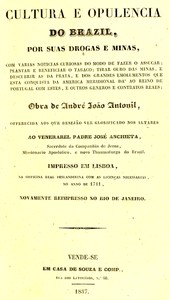
Cultura e opulencia do Brasil por suas drogas e minas : com varias noticias…
Forget dusty history textbooks. André João Antonil's Cultura e Opulência do Brasil is a direct line to the heart of early 18th-century Brazil. Published in 1711 and almost immediately recalled by a nervous Portuguese government, this book was considered too revealing for public consumption. It's part economic manual, part moral treatise, and completely fascinating.
The Story
There isn't a traditional plot with characters. Instead, Antonil structures his book like a detailed report on Brazil's two biggest money-makers: sugar and gold. He walks you through the entire sugar production process, from clearing land to the final product shipped to Europe. Then, he shifts focus to the newly discovered gold mines, explaining the mining techniques, the trade routes, and the social chaos that followed the gold rush. But the real tension comes from Antonil's own voice. As a Jesuit priest, he's clearly impressed by the wealth being generated, but he's also horrified by the human cost—the enslaved Africans worked to death and the rampant greed of the colonists. The book is a constant push-and-pull between celebrating Portugal's success and warning about its moral failure.
Why You Should Read It
What makes this book so compelling is its raw honesty. Antonil isn't writing propaganda; he's trying to document a system while wrestling with its ethics. You get incredible details, like the exact number of cattle needed to power a sugar mill or the way gold was smuggled in hollow walking sticks. More importantly, you feel the author's struggle. He wants Brazil to be prosperous, but on terms that don't damn everyone's soul. Reading it, you're not just learning facts; you're inside the mind of someone witnessing the birth of a nation and its original sins. It gives you a perspective no modern history book can replicate.
Final Verdict
This is not a casual beach read. It's for the curious reader who loves primary sources—the people who want to hear history from someone who was there. Perfect for history buffs, students of colonialism or economics, and anyone fascinated by Brazil's complex past. If you've ever wondered what the day-to-day reality of a sugar plantation or a gold mine was like, straight from the source, Antonil's conflicted guidebook is an unforgettable journey. Just be prepared: it’s a stark, unfiltered look at the price of opulence.
This is a copyright-free edition. You are welcome to share this with anyone.
David Garcia
11 months agoUsed this for my thesis, incredibly useful.
Mary Johnson
9 months agoWithout a doubt, the flow of the text seems very fluid. Exceeded all my expectations.
Logan Gonzalez
1 year agoI stumbled upon this title and the atmosphere created is totally immersive. I learned so much from this.
Ashley Jones
10 months agoFrom the very first page, the content flows smoothly from one chapter to the next. Exceeded all my expectations.

Daniel Thompson
1 year agoSurprisingly enough, the character development leaves a lasting impact. Absolutely essential reading.