1

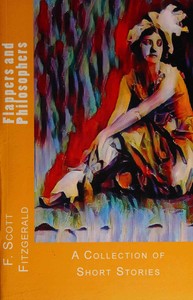
Flappers and Philosophers — Background and Themes
(0 User reviews)
208
Project Gutenberg
2003
Not confirmed
Fiction; Short stories, American
Readers of public-domain and historical texts
Project Gutenberg digital edition
en
Edition facts
Words
64,902
Reading time
283 min
Text sections
6
For Flappers and Philosophers — Background and Themes, the stored edition analysis reports 64,902 words, 4 hr 43 min estimated reading time, and 6 detected text sections.
The text analysis averages about 14.7 words per sentence, while the detected sections provide another way to judge how the source is divided.
Project Gutenberg metadata also associates the work with “Fiction,” connecting these edition facts with the source record’s subject description.
Source:
Project Gutenberg record #4368
Fitzgerald's first story collection uses recurring images of golden light, lemon halves, and physical motion to frame youthful rebellion and social friction. The opening yacht scene and a later party sequence show how structure and sensory detail create tension between leisure and crisis.
Editorial Edition Score
4.7/5
★★★★★
★★★★★
Calculated from edition completeness, EPUB availability, text structure and catalogue metadata. Not a user rating.
How this score is calculated
- Description quality20 pts
- Title & short description10 pts
- Source metadata20 pts
- Text length15 pts
- Chapters / structure15 pts
- EPUB file integrity20 pts
Total of 100 points, scaled to a 2.5-5.0 range. Editions with an empty description or a missing EPUB file are not scored.
Edition quality
Public-domain source text
Read the source text
The source text is kept in the dedicated reader, separate from this catalogue record and its commentary.
Fitzgerald opens Flappers and Philosophers with a sea that is a “blue dream” and a sky “as blue as the irises of children’s eyes.” The sun tosses “little golden disks” at the water, and a half-lemon rocks on the deck. This precise, image-driven beginning establishes a pattern: the stories often move from a poised, almost painterly tableau into abrupt disruption. The lemon—sucked dry, then pulpless—becomes a small emblem of languor and depletion that recurs in altered forms.
Golden Collars and Lemon Halves: Recurring Images
The opening paragraph of “The Offshore Pirate” concentrates several images that reappear across the collection. The “golden collar” of coins forming at sunset, the half-lemon “sucked dry,” and the girl’s “blue-satin slippers which swung nonchalantly” all suggest a world of decorative surfaces and impending waste. In a later excerpt from “The Cut-Glass Bowl,” a child’s poisoned hand and a torn lace pannier echo this pattern of something once ornamental becoming damaged or urgent. The lemon, initially a prop of idle boredom, is replaced by a swollen thumb and a frantic search for a doctor. Fitzgerald does not explain these connections; he lets the reader feel the shift from golden light to feverish heat.
Movement Between Scenes: From Yacht to Party to Nursery
The structure of the excerpts shows Fitzgerald’s habit of cutting between enclosed spaces. “The Offshore Pirate” stays on a yacht, with dialogue confined to a deck and a companionway. “The Cut-Glass Bowl” moves from a party in a music-room to a nursery, then to a telephone call. The transitions are abrupt: a maid appears with news of a poisoned hand, and the party “suddenly receded.” The narrative follows Evylyn as she runs upstairs, and the reader is left with a “confused picture” of cigar smoke and argument. This technique of rapid, physical movement—running, kneeling, tearing lace—gives the prose a nervous energy that undercuts the earlier static luxury.
Voice and Dialogue: The Sound of Refusal
Fitzgerald’s dialogue in these excerpts is marked by clipped, defiant replies. Ardita’s “Oh, shut up” and “Put it in writing” establish a tone of studied indifference. Later, Harold’s slurred “Sult m'own cousin m'own house” shows language breaking down under alcohol and anger. The contrast between the two scenes is sharp: the first is a controlled performance of rebellion, the second a loss of control. Fitzgerald uses repetition (“Ardita!” three times) and interruption (the lemon “allowing three words to slip out”) to create a rhythm of resistance. The voices are not expository; they reveal character through what is left unsaid or half-said.
The Cut-Glass Bowl: A Case Study in Structure
The excerpt from “The Cut-Glass Bowl” demonstrates how Fitzgerald builds a scene around a single object and a sudden crisis. The story’s title object does not appear in the passage, but the narrative is organized around a cut—the child’s cut thumb—and the bowl may be a metaphor for fragile social surfaces. The sequence is tightly timed: the cut occurs at three o’clock, the party at eleven, and the swelling develops “eight hours” later. Evylyn’s race through the house, her torn dress, and the banging door all create a sense of accelerating disaster. Fitzgerald does not resolve the crisis in the excerpt; he leaves the reader with the image of a mother kneeling, smoothing hair, and a doctor who “sounded angry.” The structure prioritizes momentum over explanation.
These stories reward attention to small details—a lemon, a torn pannier, a repeated word. Fitzgerald’s method is to place his characters in settings that seem stable and then introduce a single, often physical, disruption. The reader is not given full context for the conflicts; instead, the prose moves quickly from one moment to the next. Approaching the collection as a series of linked scenes rather than self-contained plots may help in noticing how images and voices echo across the eight stories.
Reading about that golden light in Flappers and Philosophers, I felt the same quiet ache I get near the end of Christmas Eve, when the warmth of a room seems to hold back the dark. It reminded me, somehow, of the snowbound stillness in The Christmas Miracle 1911 — Inside the Classic—not the dazzle, but the hush between moments, where everything waits.
There are no reviews for this eBook.
There are no comments for this eBook.
Reader reflection
Record your reading impressions
A brief reflection can help important ideas stay with you longer.
Your progress
0
/
10
2
What was your overall reaction to the book?
3
How likely are you to recommend this book?
4
Did the language feel accessible?
5
Did the book give you something worth debating?
6
How would you describe its reading pace?
7
How clear did the writing feel?
8
Did this book create an emotional response?
9
Which lesson or insight stayed with you?
10