1

Men, Women, and Boats — A Reader’s Guide
(0 User reviews)
1417
Project Gutenberg
2005
Not confirmed
Short stories; United States -- Social life and customs -- 19th century -- Fiction
Readers of public-domain and historical texts
Project Gutenberg digital edition
en
Edition facts
Words
56,794
Reading time
247 min
Text sections
7
For Men, Women, and Boats — A Reader’s Guide, the stored edition analysis reports 56,794 words, 4 hr 7 min estimated reading time, and 7 detected text sections.
The text analysis averages about 15.3 words per sentence, while the detected sections provide another way to judge how the source is divided.
Project Gutenberg metadata also associates the work with “Short stories,” connecting these edition facts with the source record’s subject description.
Source:
Project Gutenberg record #7239
This collection of Stephen Crane's short stories and sketches, edited by Vincent Starrett, gathers works from out-of-print volumes and magazines, including 'The Open Boat' and lesser-known pieces. The catalog subjects emphasize social customs, but the excerpts reveal a focus on urban poverty, war, and psychological tension, often with a detached, ironic voice.
Editorial Edition Score
4.7/5
★★★★★
★★★★★
Calculated from edition completeness, EPUB availability, text structure and catalogue metadata. Not a user rating.
How this score is calculated
- Description quality20 pts
- Title & short description10 pts
- Source metadata20 pts
- Text length15 pts
- Chapters / structure15 pts
- EPUB file integrity20 pts
Total of 100 points, scaled to a 2.5-5.0 range. Editions with an empty description or a missing EPUB file are not scored.
Edition quality
Public-domain source text
Read the source text
The source text is kept in the dedicated reader, separate from this catalogue record and its commentary.
The catalog subjects for this collection—"United States -- Social life and customs -- 19th century"—suggest a broad survey of American manners, but the excerpts reveal a narrower, grittier focus. In "An Experiment in Misery," the youth's encounter with an "assassin" in a dim restaurant, where bowls are "webbed with brown seams" and spoons bear "black mosslike encrustations of age," dwells not on customs but on the physical degradation of poverty. The editor Vincent Starrett's note acknowledges that some pieces were rescued from "out-of-print volumes and old magazine files," implying a salvage operation for Crane's minor works. The stories often center on men in extreme situations—war, shipwreck, urban destitution—rather than the domestic or social scenes the catalog implies.
Poverty as a Physical Experience
In "An Experiment in Misery," the youth's poverty is rendered through sensory details: the "long counter, dimly lighted from hidden sources," the coffee bowl's seams, and the spoons "bent and scarred from the attacks of long-forgotten teeth." The assassin's monologue—"'great job out'n Orange. Boss keep yeh hustlin' though all time'"—is transcribed in dialect, capturing the rhythm of speech without romanticizing it. The catalog's phrase "social life and customs" seems inadequate for this visceral depiction of hunger and exhaustion. The youth's awe at the "multitude of buildings, of pitiless hues and sternly high" suggests a city indifferent to its poor, a theme more structural than customary.
War and Its Aftermath
Several stories in the collection, such as "The End of the Battle" and "An Episode of War," treat combat not as grand strategy but as isolated, absurd moments. The editor's estimate notes Crane's "talent for war and personal adventure" and his ability to depict "the isolated deed of heroism in its stark simplicity and terror." Yet the excerpts show little of heroism; instead, they emphasize confusion and physical shock. The catalog's "psychological" tag fits better here, as Crane's war pieces often focus on a soldier's internal dislocation rather than the social customs of military life. The omission of "The Blue Hotel" due to copyright complications suggests that even Starrett's curation was constrained by availability, not thematic unity.
The Editor's Role in Shaping the Collection
Vincent Starrett's note explains that he gathered tales from "out-of-print volumes and old magazine files," including three stories from the London edition of The Open Boat and Other Stories that did not appear in the American volume. This editorial intervention means the collection is not a straightforward reprint but a reconstruction of Crane's scattered work. The catalog's subject "Short stories" is accurate, but the grouping under "Men, Women, and Boats"—a title Starrett invented—imposes a thematic unity that the excerpts do not fully support. The stories range from urban sketches to war tales to a piece about a dog, suggesting variety rather than a cohesive vision. Readers should treat the volume as a sampler of Crane's minor pieces, not a definitive statement.
This edition offers a chance to see Crane working in a lower key—sketching poverty, war, and odd encounters without the sustained intensity of his major works. The catalog subjects provide a starting point, but the stories themselves often undercut expectations of social observation with a more personal, psychological focus. Readers interested in Crane's development will find here the raw materials of his craft: sharp dialogue, precise description, and a willingness to let scenes stand without moralizing.
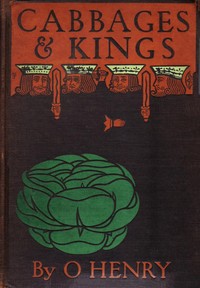
The rain slid down the window that afternoon, and Crane’s detached, ironic stare at men bobbing in a dinghy stayed with me long after I closed the book. That odd stillness—how violence and waiting blur—made me think of wandering into a stranger’s town, those tangled, half-finished stories. Later, I found myself picking up Cabbages and Kings — Background and Themes, and it felt like the same gray rain, falling somewhere else.
There are no reviews for this eBook.
There are no comments for this eBook.
Reader reflection
Your personal reading reflection
Build a private reading journal entry for this title.
Your progress
0
/
10
2
Did this book hold your interest?
3
Would you encourage someone else to read it?
4
How demanding did the text feel?
5
How well did it match your expectations?
6
Did it raise ideas you would like to talk about?
7
How understandable was the text?
8
Is this a title worth rereading?
9
What did this book teach you most?
10