
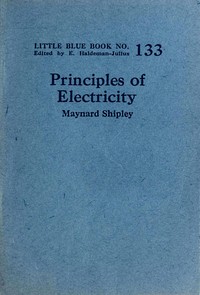
Principles of electricity by Maynard Shipley
Published in 1908, Maynard Shipley's Principles of Electricity is exactly what it says on the tin: a foundational guide to electrical science. But reading it over a century later turns it into something much richer. Shipley systematically walks the reader from the very basics—what is a positive or negative charge?—through to the workings of batteries, dynamos, motors, telegraphs, telephones, and early radio. The structure is logical and clear, building concept upon concept.
The Story
There isn't a narrative plot with characters, but there is a clear journey. The 'story' is the demystification of a fundamental force. Shipley starts with simple experiments you could almost imagine doing at home (with period-appropriate equipment, of course), like generating static electricity. He then guides you through how that restless energy is harnessed: stored in batteries, amplified by dynamos, sent singing over wires for communication, and finally turned into light and motion. You follow the 'life' of an electric current from its creation to its application. The final chapters, touching on wireless telegraphy, feel like peeking into the future, even though that future is now our distant past.
Why You Should Read It
Here's the real magic: the book's age is its greatest strength. You're not just learning about electricity; you're learning how it was explained before it became mundane. The examples are all steam engines, arc lamps, and telegraph offices. The awe is palpable. Shipley writes with a patient, encouraging voice, genuinely excited to share this knowledge. It makes you appreciate the sheer ingenuity of the foundational technology we completely take for granted. When he explains the simple brilliance of an electromagnet or the conversion of motion into current, you regain a sense of wonder for the invisible systems that power our world.
Final Verdict
This is a niche read, but a deeply satisfying one. It's perfect for history or science buffs who enjoy primary sources, or for anyone curious about the 'how' behind our electrified world and wants to start with the absolute basics. It's not for someone seeking a modern textbook with updates on semiconductors or computer chips. Think of it instead as a charming, insightful conversation with the past. You'll come away with a solid grasp of core electrical principles and, more importantly, a renewed sense of how revolutionary it all once was.
This historical work is free of copyright protections. Use this text in your own projects freely.
Mary Wright
1 year agoThis book was worth my time since the emotional weight of the story is balanced perfectly. Truly inspiring.
Joshua Martin
11 months agoMy professor recommended this, and I see why.
Lucas Davis
7 months agoI didn't expect much, but the atmosphere created is totally immersive. This story will stay with me.
Sarah King
1 year agoGreat read!




Melissa Davis
5 months agoCompatible with my e-reader, thanks.