1

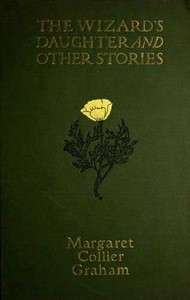
The Wizard's Daughter, and Other Stories — Story, Setting & Ideas
(0 User reviews)
138
Project Gutenberg
2008
Not confirmed
Short stories; United States -- Social life and customs -- Fiction
Readers of public-domain and historical texts
Project Gutenberg digital edition
en
Edition facts
Words
40,091
Reading time
175 min
Text sections
4
For The Wizard's Daughter, and Other Stories — Story, Setting & Ideas, the stored edition analysis reports 40,091 words, 2 hr 55 min estimated reading time, and 4 detected text sections.
The text analysis averages about 16.6 words per sentence, while the detected sections provide another way to judge how the source is divided.
Project Gutenberg metadata also associates the work with “Short stories,” connecting these edition facts with the source record’s subject description.
Source:
Project Gutenberg record #26307
An editorial note on Margaret Collier Graham's collection, focusing on its structural use of domestic interiors and outdoor vistas, recurring images of handwork and physical limitation, and the movement between intimate conversation and broader social observation.
Editorial Edition Score
4.6/5
★★★★★
★★★★★
Calculated from edition completeness, EPUB availability, text structure and catalogue metadata. Not a user rating.
How this score is calculated
- Description quality20 pts
- Title & short description10 pts
- Source metadata20 pts
- Text length15 pts
- Chapters / structure15 pts
- EPUB file integrity20 pts
Total of 100 points, scaled to a 2.5-5.0 range. Editions with an empty description or a missing EPUB file are not scored.
Edition quality
Public-domain source text
Read the source text
The source text is kept in the dedicated reader, separate from this catalogue record and its commentary.
The collection opens with a precise geographic and sensory anchor: a mesa cabin at sunset, after a norther has stripped the vineyard leaves and swept pepper berries into coral-like drifts. This attention to the physical world—the weight of a broom, the creak of a porch, the texture of dyed carpet rags—establishes a narrative voice that moves between the intimate and the observational. Graham’s stories often begin with a landscape or a domestic task, then pivot to the inner lives of her characters, a structural pattern that rewards close attention to the spaces between action.
Interiors and the Weight of Objects
In The Wizard’s Daughter, Mrs. Dysart sweeps eucalyptus leaves from the porch while speaking in a “large, level voice, as if she were quelling a mob.” The broom, the creaking piazza, the “gnarled deformity” of the vines—these details are not mere backdrop. They carry the emotional charge of the scene. Similarly, in Marg’et Ann, the minister’s crutches lean against his chair “with an air of mute but patient helpfulness,” and Marg’et Ann notes the worn places under the arms of his dressing-gown. Graham uses domestic objects to externalize inner states: the mammoth blue-and-white sock, the madder-colored ball of carpet rags, the patchwork cushions. These items are handled, examined, and described with a precision that makes them feel like extensions of character. The reader is invited to see how a character’s relationship to a thing—a broom, a sock, a crutch—reveals more than dialogue alone.
The Movement Between Speech and Silence
Graham’s dialogue is often a surface beneath which currents of restraint and unspoken feeling run. In Marg’et Ann, the narrator notes “a grave shyness among them concerning their deepest feelings, which was, perhaps, a sense of the inadequacy of expression rather than the austerity it seemed.” This observation is borne out in the scene where Marg’et Ann and Lloyd speak of their future: she looks down at “the snow of the fallen locust-bloom” and offers a conditional answer, while Lloyd does not wait to hear the “perhaps.” The narrative moves from their hands clasped to the bloom at her feet, a shift that mirrors the way feeling is displaced onto the environment. In The Wizard’s Daughter, Mrs. Dysart’s monologue about north winds and nervousness is a performance of practicality that masks a sharper awareness. Graham’s characters often say one thing while their hands—or the objects around them—say another.
Recurring Images of Limitation and Care
Physical limitation recurs across the stories: the invalid Palmerston with his “consumptive build,” the minister on crutches, the careful knitting of a sock for Laban. These are not merely plot devices; they are images that Graham returns to with a kind of structural insistence. The minister’s lameness is permanent, and the household carries “a dull ache” that talking might relieve but never does. The crutches are made, cushioned, worn—each stage of their use marks a stage of acceptance. In The Wizard’s Daughter, the north wind is blamed for nervousness, but the real limitation is the character’s separation from family and the weather as a convenient scapegoat. Graham uses these physical constraints to explore how people adapt, how they care for one another through action rather than words, and how the body’s frailty becomes a kind of shared language.
Shifting Vistas: From Mesa to Interior
The stories move between expansive outdoor scenes and cramped domestic spaces. The Wizard’s Daughter opens with a valley seen from a mesa, a “soft blur of golden haze,” then narrows to the porch, the broom, the invalid’s chair. Marg’et Ann shifts from the locust-bloom outside to the minister’s table, where he taps the arms of his chair nervously. This oscillation between wide and close views is a structural principle. Graham does not linger in the picturesque; the landscape is always about to be interrupted by a human action—a gust of wind, a knock, a question. The effect is to keep the reader alert to the way setting is never static, but always in relation to the characters’ movements and moods. The valley haze gives way to the creak of the porch; the June sunshine is filtered through the minister’s absent gaze. Each shift in perspective deepens the sense of a world where interior and exterior are in constant, quiet negotiation.
These stories reward a reader who attends to the spaces between events: the pause before a reply, the weight of a hand on a crutch, the pattern of a knitted sock. Graham’s craft lies in her ability to make the ordinary—a broom, a ball of rags, a locust bloom—carry the emotional weight of lives lived under constraint. The collection offers not dramatic revelations but a steady, patient accumulation of detail that, taken together, forms a portrait of a particular American moment, seen from the porch and the kitchen table.
Reading The Wizard's Daughter, I kept noticing how the characters' hands—busy with needlework or idle in stillness—said more than their spoken words, especially inside those quiet parlors. That same feeling of unspoken weight lingering in domestic spaces came back to me later, almost unbidden, while thinking of Kitty's Class Day and Other Stories — Key Ideas to Explore. It’s curious how two different story collections can share that same gentle ache.
There are no reviews for this eBook.
There are no comments for this eBook.
Reader reflection
What was your reading experience?
Capture what you thought, learned, and would like to remember.
Your progress
0
/
10
2
Was reading this book enjoyable?
3
How likely are you to recommend this book?
4
How demanding did the text feel?
5
How valuable was this book for your own interests?
6
How strong was your personal connection to the text?
7
What did you appreciate most?
8
Is this a title worth rereading?
9
What is the main idea you are taking away?
10