
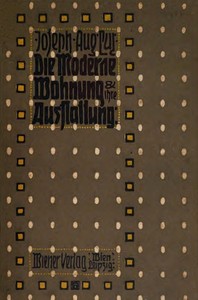
Die moderne Wohnung und ihre Ausstattung by Joseph Aug. Lux
Published in 1904, Joseph Aug. Lux's book is a passionate cry for change. Forget dry interior design theory. This is a full-throated argument against the oppressive, cluttered homes of the 19th century. Lux, a key figure in the German *Wohnreform* (housing reform) movement, believed the stuffy, dark interiors filled with heavy drapes and dust-collecting knick-knacks were literally making people ill. He saw the modern home as a tool for healing and progress.
The Story
There isn't a plot in the traditional sense. Instead, Lux builds his case like a lawyer. He starts by diagnosing the problem: the 'nervous age' and its ailments, which he links directly to bad home environments. Then, he prescribes the cure. Chapter by chapter, he attacks every element of the old way. He champions massive windows to flood rooms with light, smooth walls to replace patterned wallpapers, and simple, movable furniture over heavy, carved pieces. He argues for built-in storage to hide clutter, for hygienic materials like tile and linoleum, and for a logical flow between rooms. The enemy is ornament for ornament's sake; the hero is function, cleanliness, and light. The 'story' is the journey from a sick, old world to a healthy, new one, told through the blueprint of a house.
Why You Should Read It
Reading Lux is like getting a backstage pass to the birth of modern design. His fervor is contagious. You feel his genuine outrage at dark corners and his almost spiritual reverence for sunlight. It's incredible to see how ideas we take for granted—open floor plans, easy-to-clean surfaces, multi-functional rooms—were once revolutionary, even subversive. While some of his specific advice is dated, the core philosophy feels strikingly current. His fight against clutter predates Marie Kondo by a century, and his focus on well-being through design is pure 21st-century wellness culture. It makes you look at your own space and ask: does this serve me, or am I serving it?
Final Verdict
This book is a hidden gem for anyone interested in design history, sociology, or just curious about how our everyday surroundings shape us. It's perfect for fans of minimalism, architecture buffs who want to understand the roots of Modernism, and readers who enjoy primary sources that crackle with personality. Be warned: it's a historical document, so the language can be formal in places. But if you push through, you'll find the voice of a true believer—a man who thought the right armchair could change the world. It’s a powerful reminder that our homes are never just four walls and a roof.
This title is part of the public domain archive. Access is open to everyone around the world.
Barbara Lopez
11 months agoI started reading this with a critical mind, the language used is precise without being overly academic or confusing. I'll be citing this in my upcoming project.
Ashley Davis
1 year agoThe author provides a very nuanced critique of current methodologies.
Mary Brown
11 months agoAs someone working in this industry, I found the insights very accurate.
Brian Wilson
1 year agoIf you enjoy this genre, the arguments are well-supported by credible references. Worth every second.






Susan Rodriguez
1 year agoI wanted to compare this perspective with traditional views, the way it challenges the status quo is both daring and well-supported. Highly recommended for those seeking credible information.