1

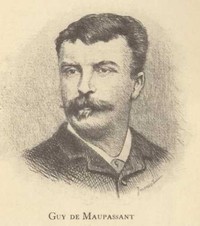
Original Short Stories, Complete, Volumes 1-13 An Index to All Stories — A Reader’s Guide
(0 User reviews)
2951
Project Gutenberg
2009
Not confirmed
Short stories, French -- Translations into English; Indexes
Readers of public-domain and historical texts
Project Gutenberg digital edition
en
Edition facts
Words
4,030
Reading time
18 min
Text sections
2
Before opening Original Short Stories, Complete, Volumes 1-13 An Index to All Stories — A Reader’s Guide, the edition data offers a quick orientation: 4,030 words, 18 min estimated reading time, and 2 detected text sections.
The text analysis averages about 29.2 words per sentence, while the detected sections provide another way to judge how the source is divided.
Project Gutenberg metadata also associates the work with “Short stories, French -- Translations into English,” connecting these edition facts with the source record’s subject description.
Source:
Project Gutenberg record #28076
This index lists all stories in Maupassant's thirteen-volume collection, organized alphabetically and by volume, with translator credits and a prefatory study by Pol. Neveux.
Editorial Edition Score
4.3/5
★★★★★
★★★★★
Calculated from edition completeness, EPUB availability, text structure and catalogue metadata. Not a user rating.
How this score is calculated
- Description quality20 pts
- Title & short description10 pts
- Source metadata20 pts
- Text length15 pts
- Chapters / structure15 pts
- EPUB file integrity20 pts
Total of 100 points, scaled to a 2.5-5.0 range. Editions with an empty description or a missing EPUB file are not scored.
Edition quality
Public-domain source text
Read the source text
The source text is kept in the dedicated reader, separate from this catalogue record and its commentary.
The index opens with a full alphabetical listing of every story in Maupassant's thirteen volumes, immediately revealing the scope of the collection. The contents page shows that each volume groups stories under a Roman numeral, and the index itself is preceded by a study of the author by Pol. Neveux. The presence of multiple translators—A. E. Henderson, Albert Cohn McMaster, and Louise Charlotte Garstin Quesada—indicates that the English versions were produced by different hands, which may affect the tone and style of individual tales.
Alphabetical Index as a Finding Aid
The alphabetical index, which forms the core of this volume, allows a reader to locate any story quickly without scanning the thirteen separate tables of contents. For instance, “Boule de Suif” appears first, followed by “Two Friends,” “The Lancer's Wife,” and so on. This arrangement is particularly useful for readers who remember a story's title but not its volume. The index also includes the volume number for each entry, so one can see at a glance that “The Diamond Necklace” belongs to Volume IV and “The False Gems” to Volume VII.
Volume-by-Volume Contents
Following the alphabetical list, the volume-by-volume contents provide a different perspective. Each volume's table of contents is reproduced in full, preserving the original ordering of stories as Maupassant or his publishers arranged them. For example, Volume I leads with “Boule de Suif” and ends with “A Duel,” while Volume II opens with “The Colonel's Ideas” and closes with “Beside Schopenhauer's Corpse.” This arrangement lets a reader experience the collection in its intended sequence, which may reveal thematic or tonal groupings that the alphabetical index obscures.
Translator Credits and Their Implications
The title page credits four translators: A. E. Henderson, Albert Cohn McMaster, Louise Charlotte Garstin Quesada, and “Others.” The volume-by-volume contents do not specify which translator worked on which story, but the alphabetical index may offer clues. For instance, the presence of multiple translators suggests that the English style may vary from story to story. Readers who notice differences in diction or sentence rhythm might compare stories from different volumes to see if a particular translator's hand is detectable. The editor, David Widger, is also credited, indicating that this digital edition was compiled from existing translations.
Prefatory Study by Pol. Neveux
The index includes a study of Maupassant by Pol. Neveux, placed before the alphabetical list. This essay likely provides biographical and critical context, though the excerpts do not reveal its content. Readers new to Maupassant may find it helpful to read this study first, as it could illuminate recurring themes or the author's development. However, the index itself does not depend on the essay; it functions as a standalone reference tool. The study's placement at the front suggests it is meant to orient the reader before diving into the stories.
This index is best used as a companion while reading the stories themselves. Whether you begin with the alphabetical list to find a specific tale or browse the volume contents to discover new ones, the structure supports both targeted and exploratory reading. The multiple translators and the prefatory study add layers that reward attention but do not distract from the primary purpose: helping you navigate Maupassant's complete short fiction.
Leafing through this index, I remembered my father’s shelf, the Maupassant volumes worn soft at the corners. He’d read them aloud, quietly, on summer evenings. The alphabetical order here feels like a cemetery of small fates. It made me think of The Deserter — Text and Context, which once gave me the same ache—the sense that every listed title hides a whole, solitary human weather inside.
There are no reviews for this eBook.
There are no comments for this eBook.
Reader reflection
Before you leave, reflect on the book
Use these questions to collect your thoughts before moving on.
Your progress
0
/
10
2
What was your overall reaction to the book?
3
Would you pass this book on to a friend?
4
Did the language feel accessible?
5
How well did it match your expectations?
6
How clearly were the main ideas presented?
7
Would you start a conversation about this book?
8
Was the book moving at the right speed?
9
What changed or sharpened your thinking?
10