1

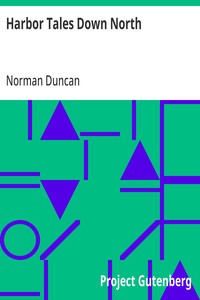
Harbor Tales Down North With an Appreciation by Wilfred T. Grenfell, M.D. — Inside the Classic
(0 User reviews)
523
Project Gutenberg
2008
Not confirmed
Short stories; Newfoundland and Labrador -- Fiction
Readers of public-domain and historical texts
Project Gutenberg digital edition
en
Edition facts
Words
64,095
Reading time
279 min
Text sections
8
Before opening Harbor Tales Down North With an Appreciation by Wilfred T. Grenfell, M.D. — Inside the Classic, the edition data offers a quick orientation: 64,095 words, 4 hr 39 min estimated reading time, and 8 detected text sections.
The text analysis averages about 13.0 words per sentence, while the detected sections provide another way to judge how the source is divided.
Project Gutenberg metadata also associates the work with “Short stories,” connecting these edition facts with the source record’s subject description.
Source:
Project Gutenberg record #24520
Nine short stories set in early 20th-century Newfoundland and Labrador, where characters face moral debts, harsh winters, and the treacherous sea. Norman Duncan's dialect-rich prose captures the tension between conscience and survival in isolated outports.
Editorial Edition Score
4.7/5
★★★★★
★★★★★
Calculated from edition completeness, EPUB availability, text structure and catalogue metadata. Not a user rating.
How this score is calculated
- Description quality20 pts
- Title & short description10 pts
- Source metadata20 pts
- Text length15 pts
- Chapters / structure15 pts
- EPUB file integrity20 pts
Total of 100 points, scaled to a 2.5-5.0 range. Editions with an empty description or a missing EPUB file are not scored.
Edition quality
Public-domain source text
Read the source text
The source text is kept in the dedicated reader, separate from this catalogue record and its commentary.
Norman Duncan's Harbor Tales Down North opens with an appreciation by Wilfred T. Grenfell, who recalls the author's ability to grasp the 'spirit of the deep' in a land where 'existence is a daily struggle with adamantine facts and conditions.' The stories that follow inhabit that same tension: between material necessity and moral reckoning, between the sea's indifference and the fierce loyalty of those who live by it. Duncan's characters speak in a thick Newfoundland dialect—'b'y,' 'swiles,' 't' pay'—that is not merely decorative but integral to the texture of their world. The excerpt from 'A Crœsus of Gingerbread Cove' shows how a debt, compounded by interest and time, can sour a man as surely as a winter gale. Tom Lane's father's debt, passed down like an heirloom, becomes a weight that reshapes his life, while the merchant Pinch-a-Penny Peter manipulates the books with a veneer of praise.
Debt as a Living Chain
In the excerpt from 'A Crœsus of Gingerbread Cove,' debt is not a transaction but a generational trap. Tom Lane inherits his father's obligation to Pinch-a-Penny Peter, and the merchant's language—'You is an honest lad, Tom Lane!'—turns conscience into a tool. Tom's labor, his sleepless nights, his reading of Scripture, all orbit this unpaid sum. Duncan shows how the debt grows even as Tom hacks away at it: 'his father's debt, with interest, according to Pinch-a-Penny's figures, which Tom had no learning to dispute, was more than it ever had been.' The arithmetic is opaque, the power asymmetrical. Tom's mysterious trip to St. John's and his hoarding of firewood—'They'll need it,' he says—hint at a plan or a resignation that the story may not fully resolve. What is clear is that debt here is a kind of weather, as inescapable as the Labrador current.
The Sea's Double Face
Grenfell's appreciation notes that the sea has 'stormy times' and 'days when its strength and its mighty depths of possibilities are the most insistent points about it.' In the sealing episode from 'A Crœsus of Gingerbread Cove,' that double face is vivid. The ice is 'a wonderful mixture of Arctic bergs and Labrador pans, all blinding white in the spring sun,' and the seals are 'a hundred thousand black specks.' The men go out in 'a blue, still day, with the look and feel of settled weather.' Yet the narrator adds that 'nobody looked for a gale of off-shore wind to blow that ice afore dawn of the next day'—a warning that the sea's calm is a mask. Pinch-a-Penny, old and creaking, insists on joining the hunt: 'I wants t' bludgeon another swile afore I dies.' The floe is moving, the ice is treacherous, and the line between a fine time and a disaster is as thin as a Dutchman's breeches of open water.
Dialect as a Window to Character
Duncan renders his characters' speech in a dense Newfoundland dialect that does more than signal place. It reveals social standing, education, and inner life. Pinch-a-Penny Peter speaks in a folksy, manipulative register: 'I'm proud t' have your name on my books!' Tom Lane's replies are shorter, more halting: 'Well,' says Tom, 'I is an' I isn't.' The dialect is consistent—'b'y,' 't',' 'un,' 'swiles'—but not uniform; the narrator's own voice is standard English, creating a quiet contrast between the observer and the observed. The transcriber's note warns that 'this e-text contains dialect and unusual spelling,' and indeed the spelling is phonetic: 'knowed,' 'sot,' 'afore.' This choice risks caricature but, in the excerpt, earns its place by making the reader hear the weight of Tom's words. When he says 'I is an' I isn't' about moving away, the ambiguity is not evasion but a man caught between hope and habit.
These stories reward a patient ear for the cadence of spoken language and an eye for the small, telling detail—a hoarded pile of firewood, a merchant's clap on the back, a man who vanishes for a day in St. John's and returns changed. Duncan does not explain his characters' motives; he lets their actions and their dialect speak. Readers attuned to the moral geography of isolated communities will find here a world where every transaction carries the weight of the sea.
There’s something about Duncan’s outports—how a single hard choice can haunt a person long after the snow melts. I thought of that quiet weight when I finished the last story in Prosper Mérimée's Short Stories — Context and Discussion. Both left me sitting still, not quite ready to close the book, just holding the ache of what stayed unsaid.
There are no reviews for this eBook.
There are no comments for this eBook.
Reader reflection
Take a moment to reflect on this book
Create a short personal record of your experience with this book.
Your progress
0
/
10
2
Was reading this book enjoyable?
3
Would you recommend this book to another reader?
4
What was the reading difficulty like?
5
Did any part of the book stay with you emotionally?
6
Could you follow the author’s main argument?
7
How personally connected did you feel to the book?
8
How useful did the reading feel?
9
In one sentence, what did you learn?
10